

Refrigeration equipment core components
In refrigeration systems, solenoid valves, as key fluid control components, undertake important functions such as refrigerant on-off control, flow direction regulation and safety protection. Among them, Danfoss type and Castel type, as leading brands in the field of refrigeration valves worldwide, their products play a vital role in industrial refrigeration, commercial cold chain and special temperature control environments.
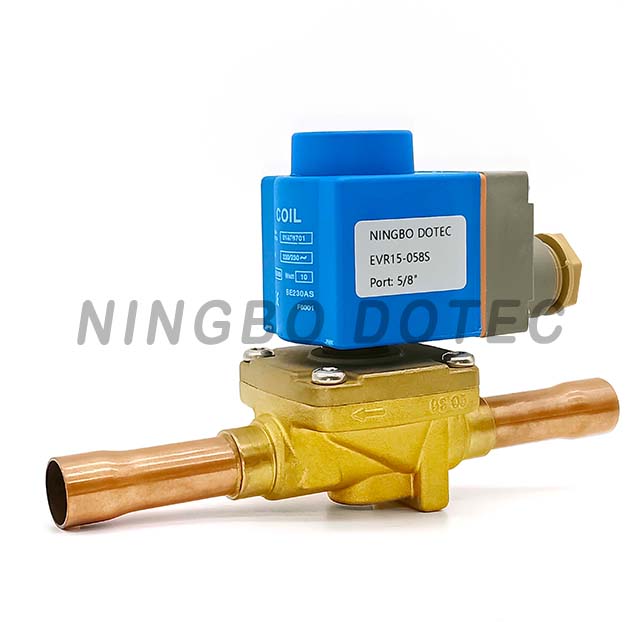
Danfoss Type Refrigeration Solenoid Valve
1. Technical features
- Direct acting (such as EVR 2/3): After power is turned on, the armature directly pulls the valve pad to open, supports zero pressure difference start (0 bar), and relies on inlet pressure and spring force to close.
- Servo type (such as EVR 6/22/25): The diaphragm or piston action is controlled by the pilot valve, and a minimum working pressure difference (0.05~0.2 bar) is required, which is suitable for high-pressure scenarios.
- The maximum working pressure is 45.2 bar (welding/bell mouth connection), and the flange connection is 32 bar. The medium temperature range is -40~105°C, and the defrosting condition can temporarily withstand 130°C.
- Suitable for perfluorinated refrigerants (such as R410A, R407C) and natural refrigerants (R290, R744, R1234ze, etc.), including flammable refrigerants.
- Supports bell mouth (≤5/8 inch), welding (≤2 1/8 inch) and flange connection. The welding model is equipped with an extended pipe, which does not require disassembly welding. Split structure, valve body and coil can be replaced separately, reducing maintenance costs.
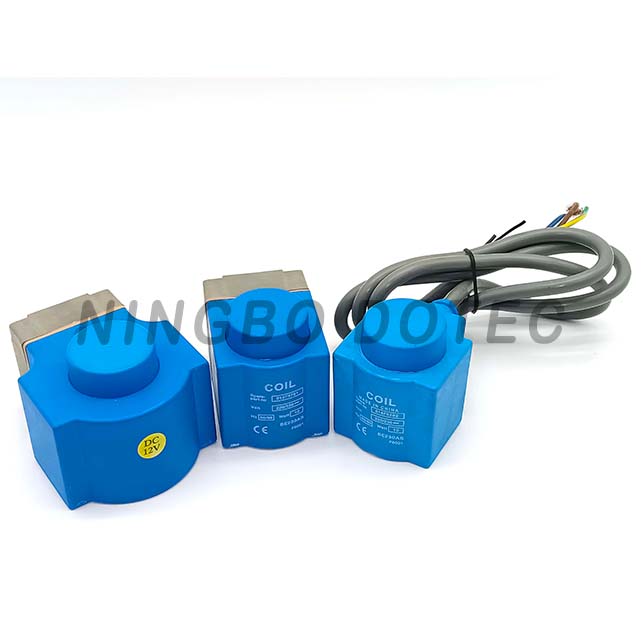
- The coil is compatible with AC/DC power supply (preferably AC220V/DC24V), power consumption is 10~12W, and MOPD (maximum operating pressure difference) is up to 38 bar.
2. Select the type based on system parameters
- Low pressure difference scenario (<0.04 MPa): select direct-acting type (EVR 2/3).
- High pressure difference/large flow scenario (≥0.04 MPa): select servo type (EVR 6/22), and the minimum pressure difference must be guaranteed.
- Normally closed type (NC): suitable for short-term opening scenarios; Normally open type (NO): used for long-term power-on systems.

Castel Type Refrigeration Solenoid Valve
Core structure and working mode
- Normal closed design: automatically closes when power is off to ensure zero leakage of the medium, suitable for safety-first scenarios (such as refrigerant control).
- Pilot valve drive mechanism: control the opening and closing of the main valve through the pilot valve, reduce energy consumption (coil power is only 8W), and support high pressure difference conditions (up to 31 bar).
- Wide temperature range compatibility: the valve body has a temperature range of -40℃ ~ +110℃, and can withstand 130℃ for a short time (such as hot gas defrosting conditions).
- The coil is made of insulating moisture-proof material, with a protection level of IP54 (dustproof and splashproof).
- Standard HM2/HM3 coil: voltage AC 220-230V/50-60Hz.
- No pressure difference starting capability: it can still open normally when the medium pressure difference is close to 0, solving the problem of low-pressure starting of the system.
- Hot plug of coil: replacing the coil does not require shutting down the system or draining the refrigerant, reducing downtime losses.
- Modular structure: The valve body and coil are designed separately, which supports separate replacement and reduces spare parts costs.
The HM2/HM3 series is an ideal choice for refrigeration and industrial flow control due to its advantages of no pressure differential start-up, wide temperature range compatibility and modular maintenance.
Key points to pay attention to when selecting:
- Media and pressure: For high pressure differential, choose pilot valve type (such as HM3), and for low pressure/no pressure differential, choose direct acting type (such as HM2).
- Environmental adaptability: For high humidity, choose IP65 (HM3), and for room temperature, choose IP54 (HM2).
- Economical efficiency: Split design is preferred for frequent maintenance scenarios to reduce long-term costs


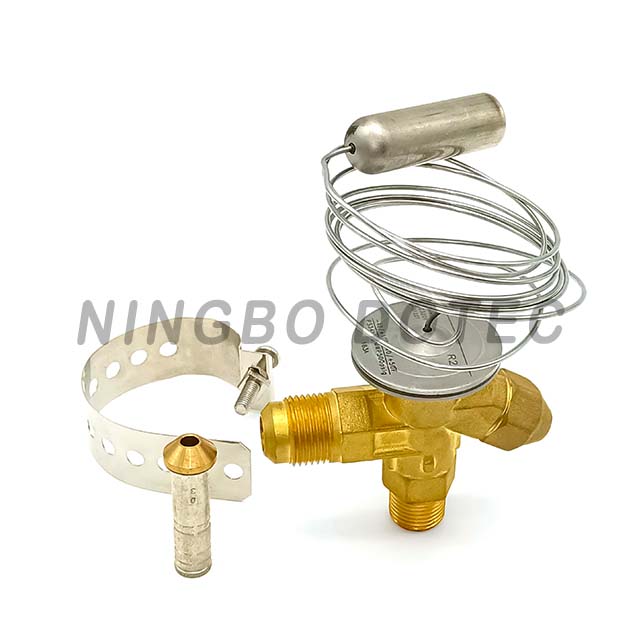
Expansion Valve
Technical features
- Throttling and pressure reduction: throttling high-pressure liquid refrigerant to low-temperature and low-pressure wet steam to create conditions for evaporation and heat absorption.
- Flow self-regulation: sensing the superheat at the evaporator outlet through the temperature sensing package, dynamically adjusting the opening, and matching the load change (the superheat range is usually 5~8℃).
Balancing method
- Internal balance: compact structure, suitable for systems with small evaporator pressure drop (such as small air conditioners).
- External balance: sensing the evaporator outlet pressure through the balance pipe to solve the problem of insufficient liquid supply caused by large pressure drop (such as long pipeline cold storage).
Refrigeration Pressure Regulator
Technical features:
-
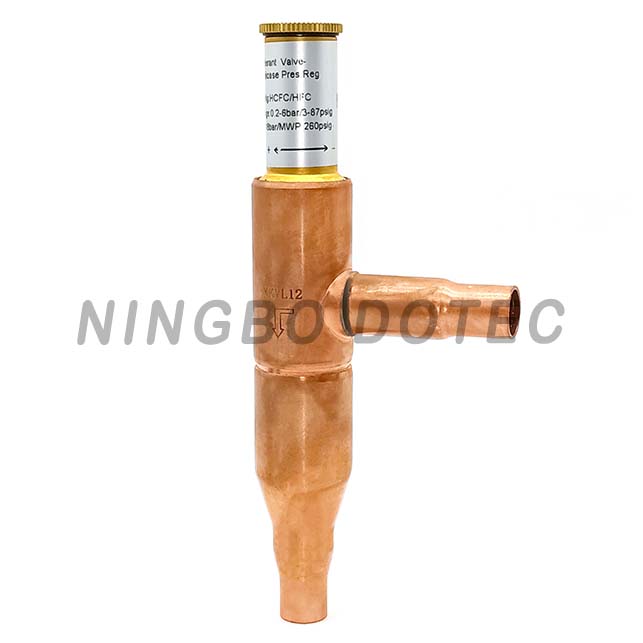
Precise and stable pressure regulation: The core adopts a balanced bellows design, which significantly reduces the impact of inlet pressure fluctuations on the set pressure and ensures that the outlet pressure is highly stable and reliable.
- Wide adjustment range: The models cover a wide range of pressure settings and application requirements, suitable for multiple functions such as evaporation pressure regulation (EPR), condensing pressure regulation (CPR), suction pressure regulation (SPR) and hot gas defrost pressure control.
- Compact and efficient design: The structure is compact and light, and it is easy to install in refrigeration systems with limited space.
- Quick response: The design ensures sensitive response to system pressure changes and maintains system pressure stability.
Main applications:
Maintaining stable temperature in cold storage/display cabinets: Preventing evaporation pressure (temperature) from being too low due to load reduction or ambient temperature drop, avoiding temperature fluctuations and food frostbite, and reducing compressor start and stop.
Refrigeration components are the core of the system, and their selection directly determines energy efficiency and reliability. We can recommend suitable products for you based on your needs.