

An ammonia solenoid valve is an important automatic switch in industrial refrigeration systems. It uses electricity to safely start or stop the flow of ammonia, helping the system run efficiently and safely.
How does an Ammonia solenoid valve work?
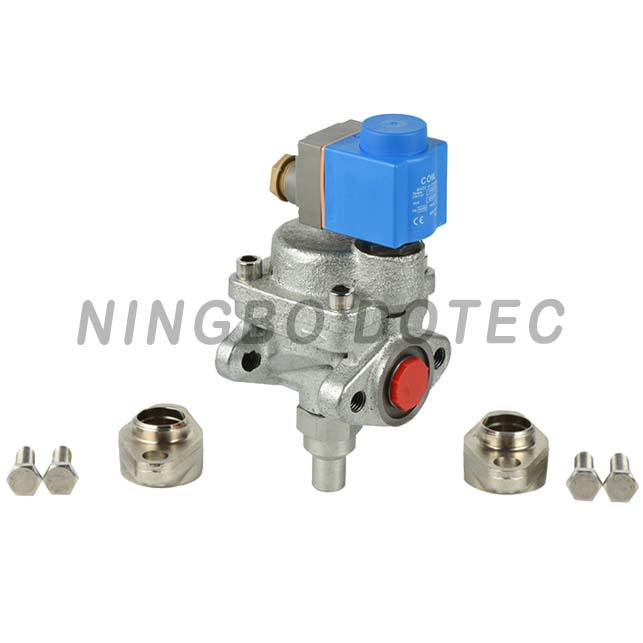
The valve has a few main parts: the valve body, a wire coil, a metal plunger, and a spring.
Power ON: When the coil gets electricity, it becomes a magnet. This magnetic force pulls the plunger up, opening the valve and allowing ammonia to flow.
Power OFF: When the electricity is turned off, the magnetic force disappears. The spring then pushes the plunger back down, closing the valve and stopping the ammonia.
By turning the power on and off, the valve controls the flow automatically, often working with temperature or pressure controllers.
How to Choose an Ammonia solenoid valve?
When buying a solenoid valve for an ammonia system, remember these points:
Must be for Ammonia: The valve must be marked for use with ammonia (R717). The materials (like the body and seals) must resist ammonia corrosion.
Size & Connection: Choose the right valve size (like DN25, DN50) to match your pipe. Also, check the connection type (flanged or threaded).
Pressure Rating: The valve's maximum pressure must be higher than your system's working pressure.
Voltage: Make sure the coil voltage (e.g., AC220V, DC24V) matches your control panel's power supply.
Protection Level: For wet or dusty areas, choose a valve with a good protection rating (like IP65).
Type: Most are "Normally Closed" (opens when powered, closes when off).
How to install and Check:
Proper installation is key for safety and performance.
- Installation Steps: Check the Nameplate: Before installing, confirm the valve is for ammonia and that the pressure and voltage ratings are correct.
- Clean the Pipes: Make sure the pipes are clean with no dirt or metal scraps. A filter before the valve is a good idea.
- Follow the Arrow: The valve body has a flow direction arrow. Install it in the correct direction.
- Mount Properly: Install it on a horizontal pipe. For flanged valves, tighten the bolts evenly. The coil should be facing upwards.
- Good Location: Place the valve where it's easy to access, with minimal vibration, and protected from water and high heat.
After Installation Checks:
- Check for Leaks: After pressurizing the system, use soapy water or a leak detector to check all connection points for any ammonia bubbles.
- Test the Action: Turn the power on and off. You should hear a clear "click" sound, confirming the valve opens and closes properly.
- Monitor: During the first hours of operation, check if the valve gets unusually hot, vibrates, or makes strange noises.
The ammonia solenoid valve is a small but crucial part. Choosing the right one, installing it correctly, and checking it regularly are the best ways to prevent problems and ensure a long service life.